Tektites and Impact Glass: A Practical Guide to Recognizing Cosmic-Thrown Glass in the Field
Opening observation: small pieces of glass can carry the story of a remarkable event—an asteroid or comet striking the surface with such intensity that local rock instantly melts and is hurled back into the air. Those droplets re‑solidify into tektites and impact glass, and a few simple principles and hands‑on checks let an observer separate them from ordinary rock or human debris.
1. The principle of formation: melting, flight, and rapid quench
At the core of every tektite and most impact glass is the same physical recipe: extremely rapid heating, ejection, and cooling. An impact delivers temperatures of thousands of degrees in milliseconds; target rock melts, is slung outward, and while airborne cools so fast that crystals do not have time to grow. The result is a glassy, often vesicle‑poor material that preserves flow lines and, in some cases, inclusions of lechatelierite (pure silica glass formed at very high temperature).
Small field analogy: think of flicking molten wax from a candle—drops form elongated shapes, skin over quickly, and preserve the orientation and flow of the flick. Tektites are the geological equivalent, with forms that record their motion through air.
2. What to look for: macroscopic clues and a few simple checks
Visual and tactile features give the first clues.
- Surface and luster: Many tektites are dark, glossy, or satiny — a fresh, glassy finish rather than earthy weathering.
- Conchoidal fracture: Breakage produces curved, shell‑like surfaces and sharp edges typical of silica glass.
- Splash forms and aerodynamic shapes: Buttons, teardrops, and dumbbells indicate the material was molten in flight and shaped by air.
- Low density and heft: Tektites are often lighter than comparable‑sized rocks because they are glassy and may contain vesicles.
Simple field checks you can do without laboratory gear:
- Heft test — compare mass to a known rock of similar size to sense lower density.
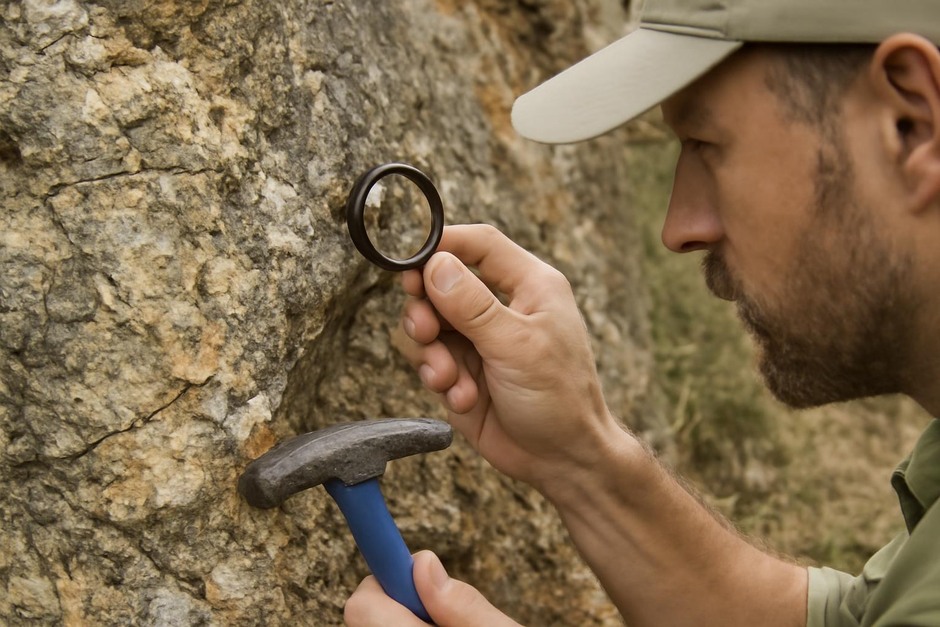
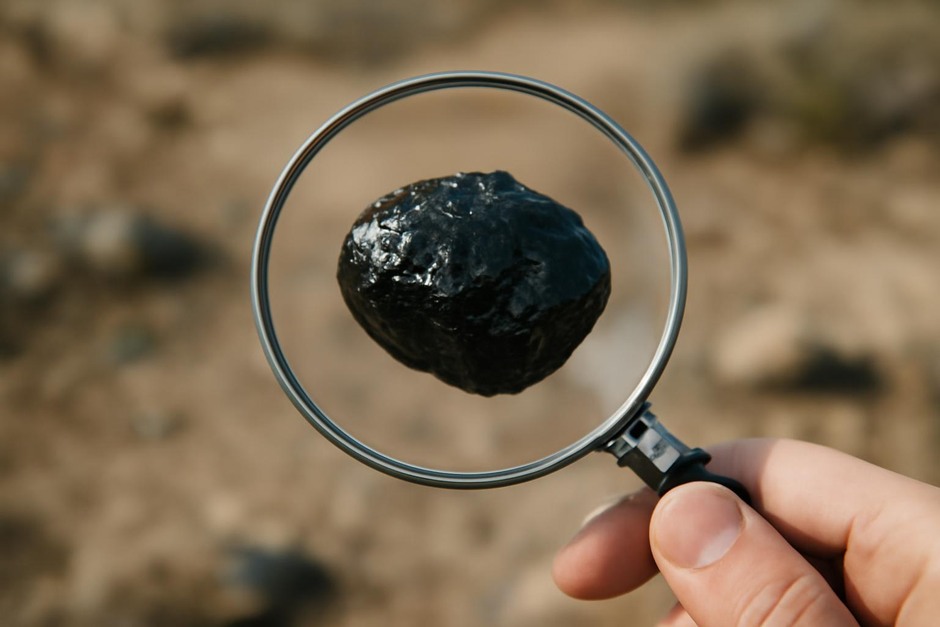
- Hand‑lens inspection — look for flow lines, stretched bubbles, and a lack of coarse crystals.
- Scratch test — glass will not scratch easily with a knife but can be scratched with harder minerals (use caution).
3. Distinguishing natural impact glass from human‑made glass and volcanic products
Not all glass on Earth is from space. Volcanic obsidian, slag from industrial processes, and modern glass can all mimic tektites. The best approach is comparative: pair the macroscopic checks above with context and a few targeted observations.
- Context: Is the find in a known strewn field or near an impact structure? Are there associated impact indicators such as shocked mineral grains in nearby outcrops? Context is often decisive.
- Surface features: Tektites commonly have a fresh, unweathered skin even after long burial, whereas industrial slag frequently bears distinctive flow marks, sharp metallic bubbles, or embedded debris.
- Internal texture: Under a lens, tektites typically show elongated vesicles and stretched bubble shapes indicating flight. Volcanic glass may show banding from different cooling regimes and sometimes abundant microlites (tiny crystals).
Hands‑on micro‑tests (safe and non‑laboratory):
- Rub test: gentle abrasion on a small, unobtrusive area will reveal whether a bright, glassy sheen is superficial (often human polish) or intrinsic.
- Saltwater float: a crude density check—tektites rarely float in saltwater but obsidian and many industrial slags have different buoyancies; this is an auxiliary check, not definitive.
4. Mapping finds and what patterns reveal about origin
Tektites rarely occur as isolated curiosities—their distribution often forms a strewn field that points back to a source crater. Simple mapping of find locations and morphology provides insight:
- Orientation of splash‑forms: Flattened or ablated faces typically point downstream relative to flight. Recording the long axis orientation across multiple samples can suggest flight direction.
- Size distribution: Larger pieces tend to lie closer to the source. Plotting sizes versus distance can help locate a source area.
- Cluster analysis: Recording GPS points (or a simple grid) and noting associated lithologies helps separate in‑place geological glass from transported finds.
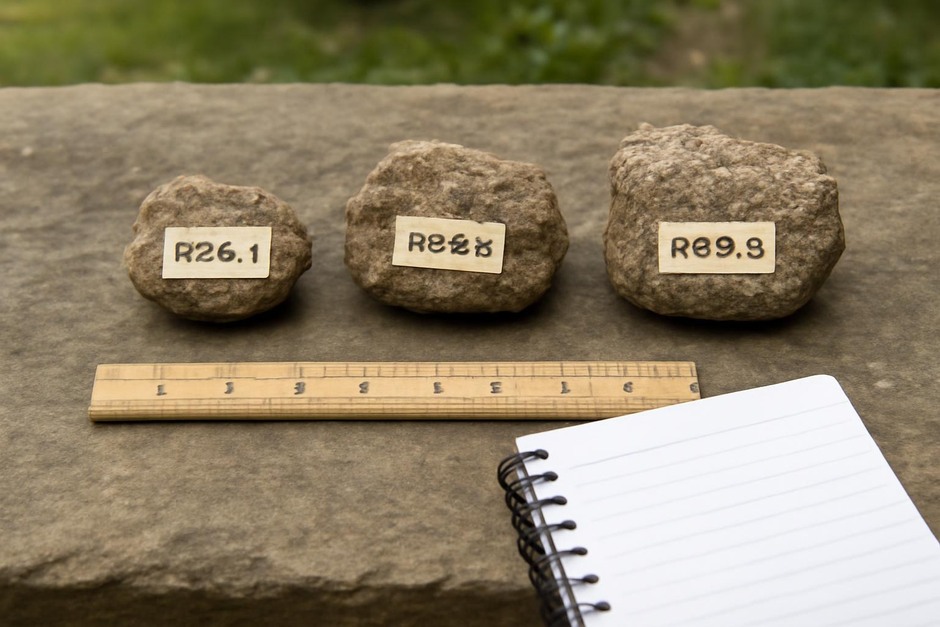
Small example routine: when you find a candidate, note its GPS, photograph both sides, sketch any flow lines or pitting, and measure maximum dimension and weight. After a handful of finds, lay them out in map view and look for a downrange progression of decreasing size or consistent orientation.
Measured conclusion
Tektites and impact glass are records of brief, extreme events preserved as ordinary‑looking glass. Understanding the physics of melting, flight, and rapid quenching gives a framework for field recognition; a handful of non‑invasive checks (heft, hand‑lens inspection, surface morphology) and simple mapping add robustness. While laboratory analysis settles origin questions definitively, these small observational routines let a curious observer read the first chapters of an impact event in the field.