Wind-Sculpted Stones: A Studio Notebook on Ventifacts and Wind Histories
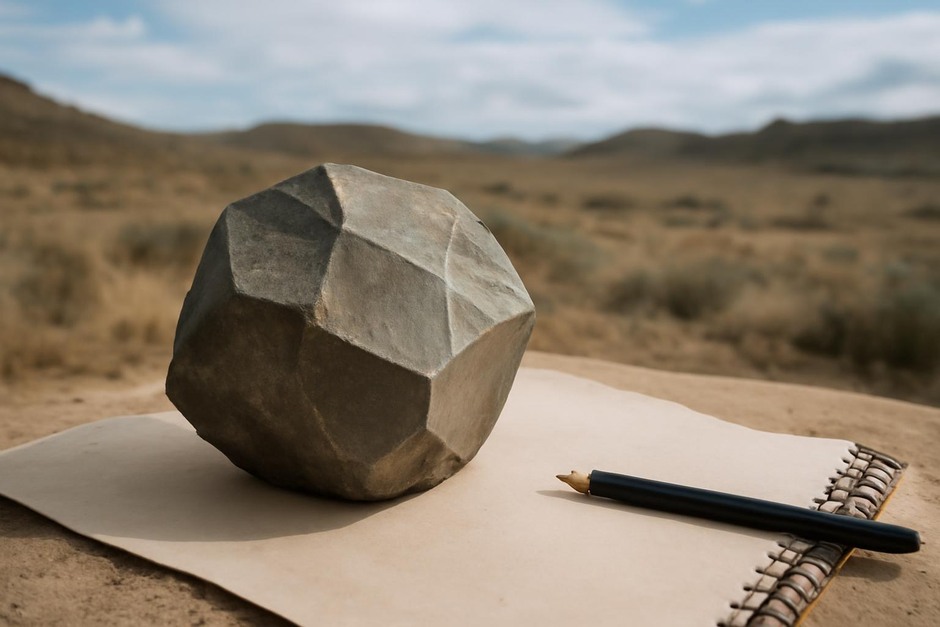
Opening observation — I found a palm-sized stone on a gravel plain with three sharply polished facets pointing in nearly the same azimuth. The surfaces were micro-polished and showed narrow flutes where coarser grains had carved grooves. The question that guided the following notes: to what extent can such ventifacts be treated as a reliable recorder of past wind direction and intensity, and how should a field worker document and test that claim?
Question: What ventifacts are and why they matter
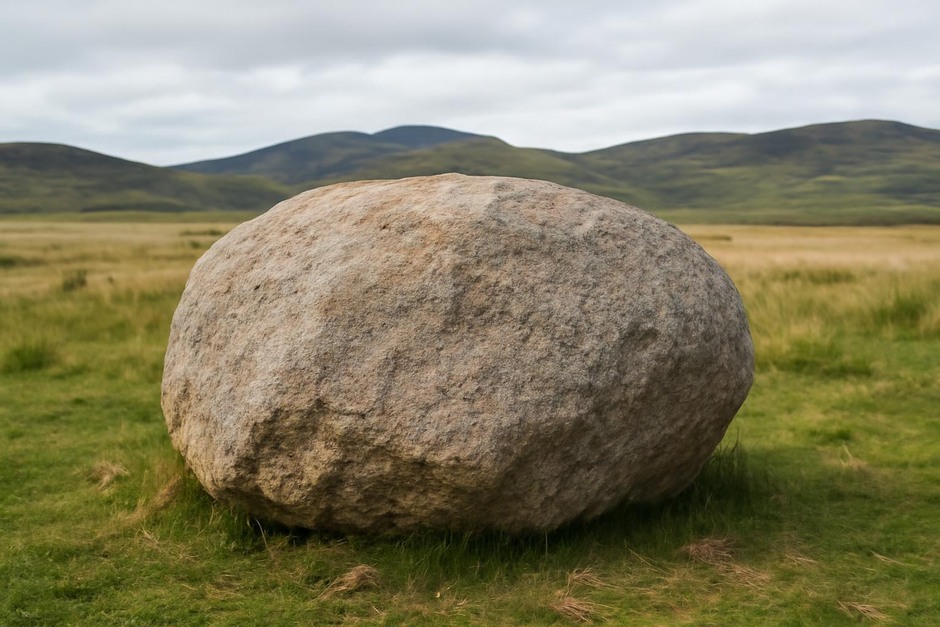
Ventifacts are rocks abraded and polished by wind-driven sediment. They form where saltating sand impacts exposed clasts over prolonged periods. Because the abrasion is directional, facets and flutes on ventifacts can preserve a geometric signal of the dominant particle flux. That makes them attractive as a proxy for prevailing winds, deflation pathways, and the locations of persistent sand supply. But they are context-dependent: substrate hardness, grain size, and episodes of burial or movement all shape the final form.
Process — locating and documenting ventifacts in the field
Studio approach: treat each ventifact as an experiment log. Record the context carefully, then measure.
- Site sketch and photo set: panorama of the plain, upwind and downwind vantage points, scale (coin or ruler), and orthogonal photos of each facet.
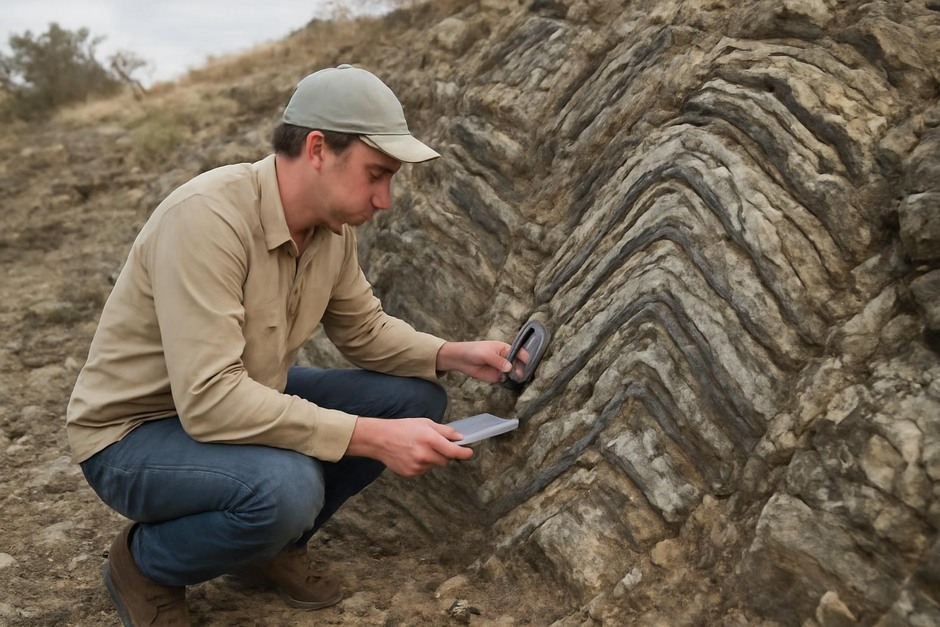
- Orientation measurements: use a compass to record azimuths of facet normals and striations. Record the tilt angle if the stone is not horizontal.
- Surface description: note polish, micro-pitting, flutes, and their spacing. Describe grain-sizes of local sand and the presence of induration or crusts.
- Contextual notes: nearest dune crest, vegetation, rock-source direction, and any signs of uplift, burial, or human disturbance.
Collect small samples of loose sand adjacent to ventifacts for grain-size analysis back in the studio. When possible, establish transects to map facet azimuths across dozens of stones rather than relying on single specimens.
Process — simple experiments and quantitative notes
To move from observation to inference, combine basic experiments and statistical summaries.
- Replicate abrasion: tumblers in the lab with representative sand and a similar lithology can show how quickly facets form under controlled flux. While a tumbler compresses timescales and stress paths, it clarifies relative sensitivity to grain size and hardness.
- Rose diagrams and circular statistics: compile facet normals from many ventifacts and plot on a wind-rose. Concentration and dispersion metrics (mean vector length, angular variance) indicate directional persistence.
- Correlate with modern wind observations: if modern anemometer or regional climatology exists, compare modal wind directions and gustiness to facet orientations. Agreement supports the interpretation of a persistent regime; disagreement suggests local funneling or reworking.
- Intensity proxies: use relative indicators such as depth and sharpness of fluting, extent of polish, and percent of surface removed to infer relative abrasive work. Calibrate these with abrasion experiments where possible.
Maintain a lab notebook that pairs each specimen’s field sheet with experimental results and statistical summaries.
Review — interpreting the wind record and its limits
Reviewing ventifacts as records means explicitly listing the taphonomic filters and alternative explanations.
- Reorientation and transport: stones can be rolled, buried, or moved, which can reset facet development or expose new faces.
- Source lithology: harder rocks preserve finer polish and may form long-lived facets; softer lithologies may round faster and give a brief record.
- Local amplifiers: topography, vegetation, or coarse lag deposits can funnel or block sand, producing local signals that differ from regional winds.
- Time averaging: facets integrate over the period when sand flux was active. They rarely resolve short-lived events and can combine multiple wind regimes into a single orientation.
Best practice is to treat ventifacts as one component of a multi-proxy approach: combine with dune slipface orientations, deflation corridors, grain-size sorting, and where feasible independent age control on relict surfaces.
Measured conclusion
Studio assessment: ventifacts are valuable, low-tech recorders of directional sediment flux when documented and interpreted with care. The field process reduces to disciplined context recording, systematic orientation sampling, and simple calibration experiments. The review reminds us that ventifacts are filtered, sometimes ambiguous signals — powerful for reconstructing persistent local wind patterns but best used alongside other geomorphic evidence. For future fieldwork, prioritize transects and replication, and pair abrasion experiments with rose-diagram analysis before drawing climatic conclusions.